
Seeds & everyday nutrition
Chia seeds are tiny, mild and remarkably easy to use — no grinding, no cooking, no fridge. Just stir them into food and drinks you already enjoy, and let the fibre, plant omega-3 and bone minerals do quiet, steady work.
The short answer
Chia seeds may be the lowest-effort healthy habit going. Two tablespoons bring roughly a third of many adults’ daily fibre target, a useful amount of plant omega-3, and bone-friendly minerals such as calcium and magnesium — in a seed that needs no grinding and keeps for months in a cupboard jar. In liquid, chia swells into a soft gel that thickens puddings and drinks; sprinkled dry, it adds a gentle crunch. The benefits below are real but modest, stated plainly: chia supports a healthy eating pattern; it does not treat any condition.
What are chia seeds?
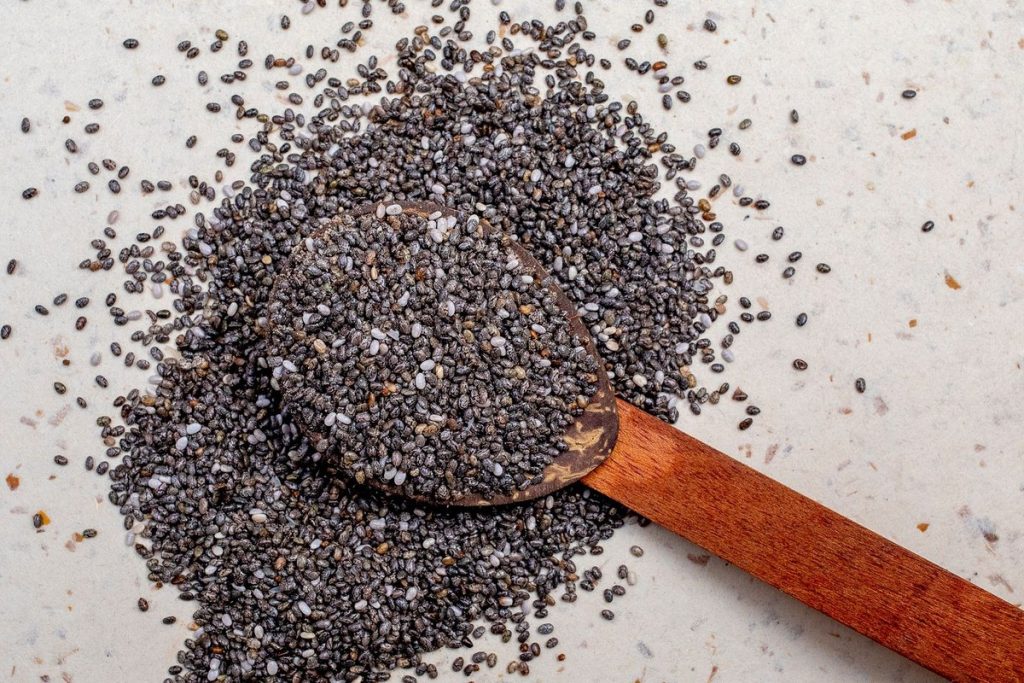
Chia seeds are the small black-and-white mottled seeds of Salvia hispanica, a mint-family plant from Mexico and Guatemala. They were a staple for Aztec and Maya peoples — light to carry, slow to spoil and filling, so messengers are said to have travelled on little more than chia and water. Black and white varieties are nutritionally almost identical.
Chia’s defining trait is what happens in liquid: the coat absorbs many times its own weight in water and forms a soft, spoonable gel. That gel sits behind most of chia’s benefits — fullness, digestion, and how a meal’s sugars are absorbed — and behind its famous foods, from overnight puddings to Mexico’s lemon chia drink.
Nutrition snapshot
Values below are for about 2 tablespoons of chia seeds (roughly 25 g) — approximate, since brands vary slightly, but they show why a small serving counts as nutrient-dense.
Per 2 tablespoons chia seeds (approximate)
Fibre is the headline: two tablespoons cover about a third of the 25–38 g a day most adults are advised to aim for — and many fall well short.
7 reasons to eat chia seeds every day
The best-supported, most practical reasons — stated plainly. Each is a “can help support”, not a promise.
Fibre for comfortable digestion and regularity
Chia carries insoluble fibre, which adds bulk, and soluble fibre, which forms its gel with water. Together they can support regular bowel movements and a comfortable gut — the benefit people notice most.
A rich plant source of omega-3 (ALA)
Chia is one of the richest plant sources of ALA, the plant omega-3. The body converts only a little ALA into the EPA and DHA in oily fish, so chia does not fully replace fish — but for vegetarian and vegan diets it is one of the most practical sources available.
Helps you feel full, which can support weight goals
Chia’s gel expands in the stomach and its fibre and protein slow digestion, so meals with chia satisfy for longer. It will not cause weight loss alone, but as a daily habit it can make sensible portions easier.
Blood-sugar friendly
The gel chia forms in a meal slows how quickly carbohydrates are absorbed, which can help soften the rise in blood sugar after eating — small studies have found gentler post-meal glucose curves with chia. It fits diabetes-conscious eating in normal food amounts — alongside, never instead of, prescribed treatment.
Bone minerals: calcium, magnesium and phosphorus
Gram for gram, chia contains more calcium than milk. A serving is far smaller than a glass of milk, but two tablespoons still add around 150 mg of calcium plus magnesium and phosphorus, the other minerals bone is built from — genuinely useful if you eat little dairy.
Everyday support for heart health
Soluble fibre plus plant omega-3 is the pairing nutrition guidance keeps returning to for heart health. Studies suggest modest effects — small improvements in some cholesterol and blood-pressure readings — best understood as one good habit inside a heart-friendly pattern, not a treatment.
Hydration and steady energy
Because the gel holds water, chia drinks release fluid gradually — one reason chia water has long been an endurance food, from Aztec messengers to today’s long-distance runners. Its slow digestion also helps energy feel even between meals.
Chia vs flaxseed: which should you buy?
Chia and flax are the two seeds readers ask us about most — and they overlap more than they differ. Our guide to flaxseed benefits covers flax in the same detail; here is the honest head-to-head:
Eat them exactly as they come — no grinding needed, because the seed softens as it absorbs liquid. They gel in drinks and puddings, are rich in calcium for a seed, taste very mild, and keep for months at room temperature. Convenience is chia’s superpower.
Must be ground before your body can reach the nutrients inside, and ground flax keeps best in the fridge. In return, flax is richer in lignans, offers slightly more ALA per spoonful, and is often cheaper.
You do not have to choose. Chia for convenience, puddings, drinks and shelf life; flax for lignans and value. Many kitchens keep a jar of each.
Do you need to soak chia seeds?
No — and this is chia’s big advantage over flax. Chia can be eaten whole and dry, sprinkled over salads, toast or yogurt, and your body can use it without grinding. Soaking is optional, not required.
That said, soaking brings out chia’s best texture and is gentler if you are new to fibre. Rest the seeds in liquid for 15–20 minutes (or overnight for pudding) and they form the soft gel that makes puddings, drinks and jams work. One firm safety rule: never swallow a spoonful of dry chia seeds. They expand as they absorb fluid and can swell uncomfortably — always mix chia into moist food or liquid, or have it with a drink.
Simple ways to eat it
Chia asks almost nothing of you — no cooking, no grinding, no special equipment. About 1½–2 tablespoons a day across any of these ideas suits most adults.
Easy everyday ideas
Chia pudding
The classic: stir 3 tablespoons of chia into about 180 ml of milk or plant milk with a little honey or maple syrup, rest 2 hours or overnight, then top with fruit.
Smoothies
Blend in 1 tablespoon — it thickens the smoothie and adds fibre and omega-3, flavour unchanged.
Oatmeal and porridge
Stir a spoonful in while cooking, or sprinkle over the top with fruit and nuts.
Yogurt
Mix into plain yogurt or raita and rest 10 minutes; the seeds swell and thicken it.
Lemon chia water (agua de chia)
Stir 1 tablespoon of chia into a tall glass of water with lemon juice and a little honey, rest 15 minutes, stir again — the simplest way to try the famous gel.
Baking
Stir whole seeds into muffins, pancakes and breads, or whisk 1 tablespoon of chia with 3 tablespoons of water, rest 10 minutes, and use the gel instead of one egg.
Chia jam
Simmer berries until soft, mash, stir in 1–2 tablespoons of chia and rest 20 minutes — a spreadable jam with no pectin. Refrigerate and use within about a week.
How much, and how to store it
For most adults, about 1½–2 tablespoons of chia a day (roughly 20–30 g) is a sensible amount — enough for the fibre and omega-3 without overwhelming digestion. New to chia? Start with 1 tablespoon a day for a week, increase gradually, and drink water through the day.
Storage is where chia earns its keep: whole seeds are stable at room temperature. Keep them in an airtight jar in a cool, dry cupboard and they stay good for many months — often well over a year. Discard seeds that smell musty or stale, and refrigerate chia once it is soaked or made into pudding or jam.
Cautions worth knowing
Frequently asked questions
Do chia seeds need to be ground like flax?
No. Chia softens and opens on its own as it absorbs liquid, so your body can reach its nutrients without grinding. Whole, sprinkled or soaked — the choice is texture, not nutrition.
Is chia or flax better?
Neither, honestly. Chia wins on convenience (no grinding, long shelf life, useful gel) and calcium; flax wins on lignans, a little more ALA per spoonful, and usually price. Whichever suits the recipe in front of you is a good strategy.
Can kids eat chia seeds?
Yes, in normal food amounts — stirred into oatmeal, yogurt, smoothies or baking. A teaspoon or two is plenty for young children; always serve it in moist food with a drink, and skip dry spoonfuls, a choking risk for little ones.
How long do chia seeds keep?
A long time. In an airtight jar in a cool, dry cupboard, whole chia stays fresh for many months, often well over a year, with no refrigeration. If it smells musty or tastes stale, replace it.
Yupik Organic Black Chia Seeds — 1 kg
The easiest way to keep chia on hand for the puddings, drinks and breakfasts in this article:
- Certified organic black chia — a big 1 kg value bag
- Gels easily for chia pudding, and disappears into smoothies, oatmeal and baking
- Ships from and sold by Amazon.ca
As an Amazon Associate I earn from qualifying purchases.
Bottom line
No grinding, no fridge, no strong taste — chia may be the easiest healthy seed to actually stick with. A spoonful or two a day brings serious fibre, plant omega-3 and bone minerals into meals you already make, and small, repeatable upgrades are the ones that last.
Sources and further reading
The nutrition values and general guidance in this article reflect information published by the following references. Figures are approximate and provided for general education.
- USDA FoodData Central. Nutrient profile for chia seeds (seeds, chia seeds, dried) — the source for the approximate values in the nutrition snapshot.
- Health Canada. Guidance on fibre, healthy fats and whole foods as part of an everyday eating pattern.
- Mayo Clinic. Consumer health information on chia seeds, including benefits, amounts and medication cautions.