
Thyroid support · Iodine & selenium foods
Tired, cold, foggy, gaining weight for no clear reason? The thyroid — a small gland in your neck — sets the pace of your whole body. Food cannot replace thyroid medicine, but the right vegetables may help give this gland the nutrients it needs: iodine, selenium, iron, zinc and vitamin A.
The short answer
The thyroid needs iodine to build its hormones and selenium to activate them, plus iron, zinc and vitamin A. Seaweed is the standout iodine source, leafy greens and broccoli bring iron and antioxidants, and sweet potatoes and carrots supply beta-carotene the body turns into vitamin A. Cooked cruciferous vegetables are fine in normal amounts for most people. One honest limit: no vegetable can diagnose or treat thyroid disease, and thyroid medicine should never be stopped in favour of food.
Why the thyroid needs nutrients from food
Your thyroid makes hormones — mainly thyroxine (T4) and triiodothyronine (T3) — that help control metabolism, body temperature, heart rate and energy. T4 is the storage form; much of it is converted into the more active T3, a step that depends on selenium-containing enzymes. Under-production (hypothyroidism) may bring tiredness, cold intolerance, fogginess and weight gain; over-production (hyperthyroidism) brings a racing heart, anxiety, heat intolerance and weight loss.
Iodine is the most famous thyroid nutrient because it is literally built into thyroid hormones — the “4” in T4 and the “3” in T3 count iodine atoms. Without enough iodine, the gland cannot make enough hormone and may enlarge (a goitre) trying to compensate. Most Canadians get enough iodine from iodized salt and dairy; people who avoid both may get less. Selenium helps convert T4 to T3 and protects the gland from oxidative damage. Iron matters too — low iron may impair hormone production — and zinc and vitamin A support hormone signalling.
Vegetables cannot supply everything: the richest selenium foods are Brazil nuts and seafood, and iodine’s richest sources are seafood and iodized salt. But vegetables bring iodine (seaweed), iron (leafy greens), vitamin A precursors (orange vegetables) and antioxidants — a genuinely useful supporting cast in a varied diet.
Thyroid nutrition snapshot: what the numbers say
Values below are approximate, for general education.
Daily needs and standout sources
No single vegetable supports the thyroid on its own. The pattern that may help is variety: a little seaweed sometimes, leafy greens often, orange vegetables through the week, and cooked cruciferous vegetables without fear.
7 best vegetables for thyroid support
Ranked by what each brings to thyroid health. Amounts are approximate.
Seaweed — the iodine standout
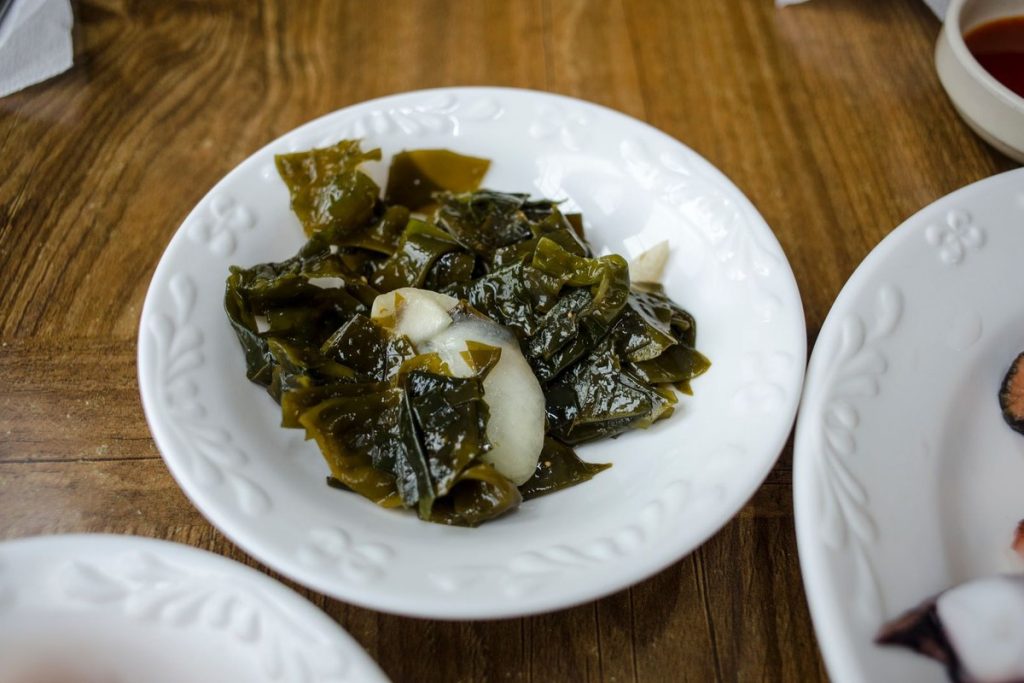
Nori, wakame and kombu are the only vegetables naturally rich in iodine, the mineral thyroid hormones are built from. A sheet of nori in sushi or a small wakame salad may help top up iodine, which can matter if you use little iodized salt or dairy. The catch is dose: kombu can be extremely high in iodine, so seaweed belongs in small, occasional servings, not daily handfuls.
Spinach — iron, magnesium and folate
Iron helps the body produce thyroid hormones, and spinach is one of the most iron-rich vegetables, along with magnesium and folate. If iron is low, thyroid function may suffer, so spinach earns its place here — especially for people who eat little meat. Our guide to iron-rich vegetables for anemia explains how to help your body absorb plant iron, including pairing spinach with vitamin C.
Kale — cooked, confident, nutrient-dense
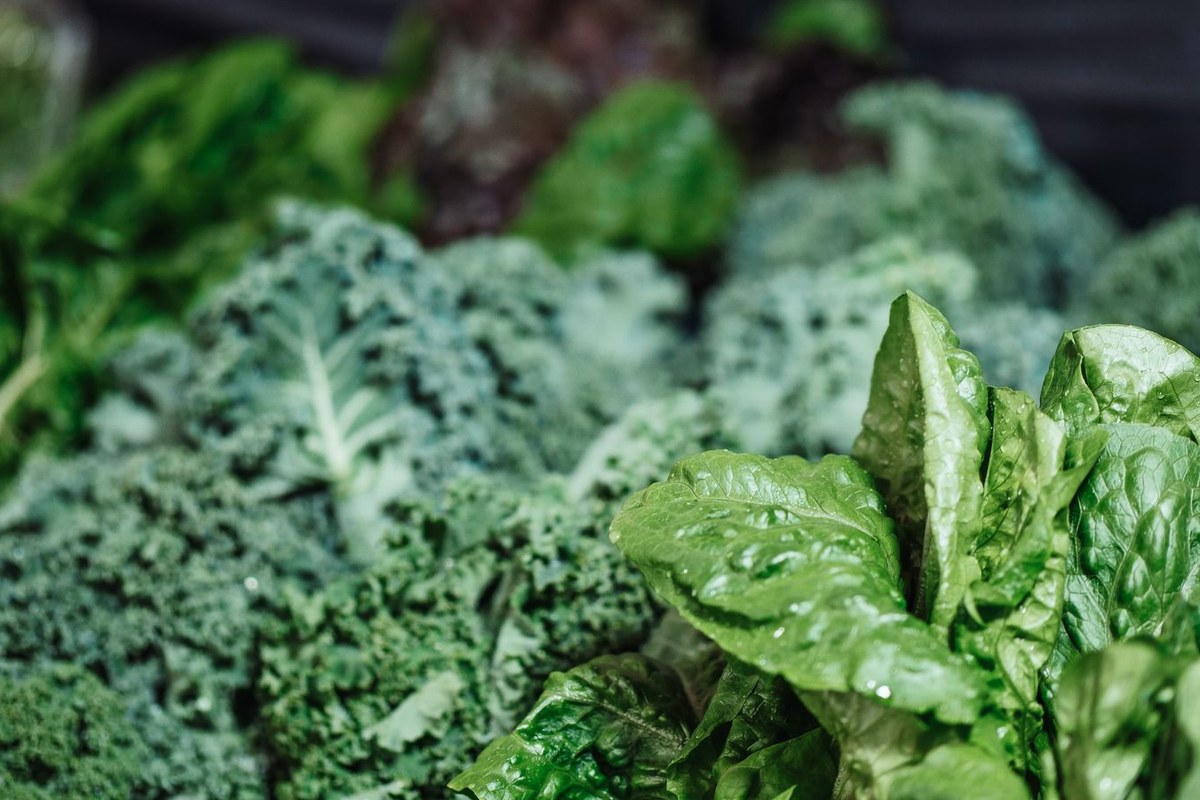
Kale brings vitamins A, C and K, calcium and antioxidants, plus a little iron. Raw kale contains goitrogens (see below), but cooking reduces them substantially, so kale soup, sautéed kale and kale chips are all sensible choices. Massaged raw kale in salads is fine in normal amounts too — problems arise only with very large, daily raw intakes.
Broccoli — vitamin C and gentle selenium support
Broccoli is rich in vitamin C, which supports iron absorption from plant foods, and it carries small amounts of selenium and zinc alongside fibre and antioxidants. Like kale, it is cruciferous, so cook it — steamed, roasted or in soup — and the goitrogen question largely takes care of itself.
Sweet potatoes — beta-carotene for vitamin A
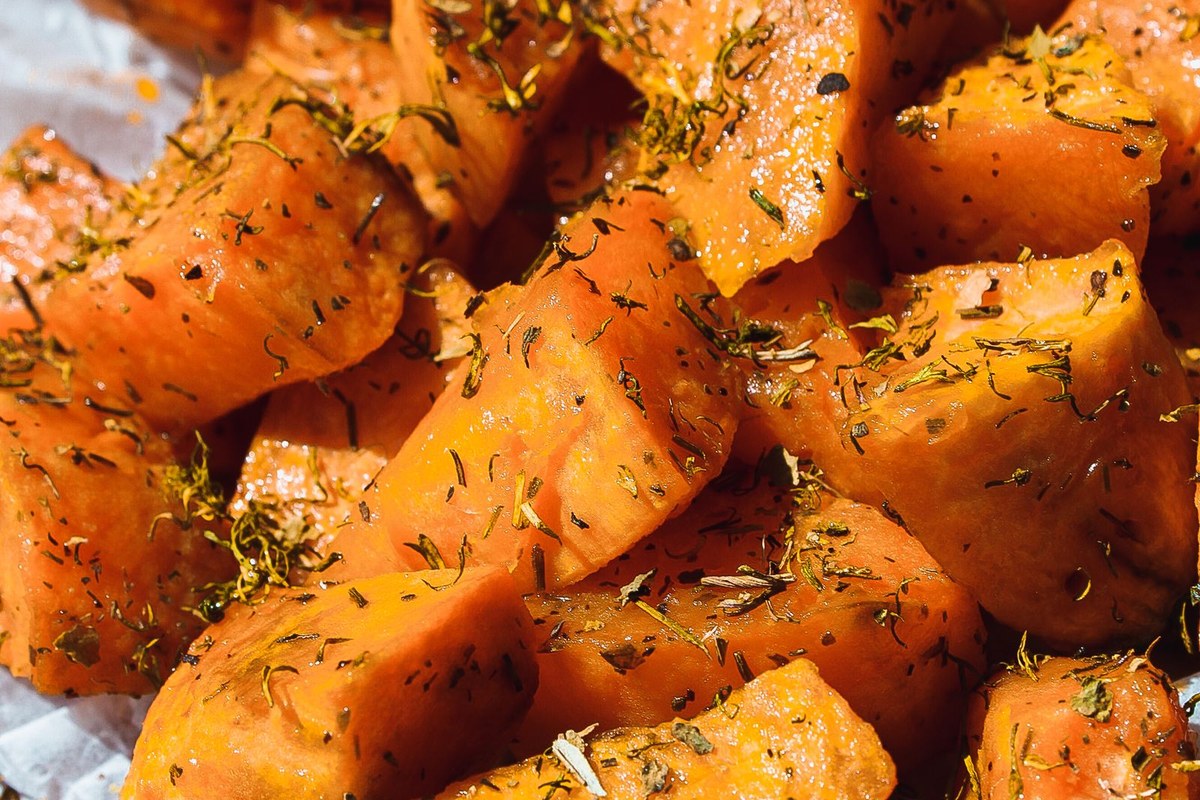
Sweet potatoes are packed with beta-carotene, which the body converts into vitamin A, a nutrient involved in thyroid hormone signalling. They are filling, high in fibre and naturally sweet. Roast them in wedges, mash them with olive oil, or bake whole and stuff with beans and greens.
Carrots — everyday vitamin A and fibre
Carrots are the everyday version of sweet potatoes: rich in beta-carotene, inexpensive and available year-round. Cooking makes their beta-carotene more available, so roasted carrots, carrot soup and carrots simmered into stews all count.
Tomatoes — vitamin C, lycopene and potassium
Tomatoes round out the list with vitamin C to support iron absorption, lycopene — an antioxidant that may help protect tissues including the thyroid — and potassium. Cooked tomatoes release more lycopene than raw ones, so tomato soup and roasted tomatoes are good choices.
Ways to eat thyroid-supporting vegetables every day
Five habits that fold these vegetables into food you already cook:
Start with a seaweed snack, not a seaweed feast
Keep roasted nori snacks or a small wakame salad as an occasional side, once or twice a week. Sprinkle nori flakes over rice or soup for iodine in a small dose.
Wilt greens into hot dishes
Stir spinach or kale into dal, soup, stew or pasta in the last few minutes of cooking. Heat wilts them, softens their flavour and reduces goitrogens.
Roast an orange tray
Sweet potatoes and carrots roasted with olive oil, salt and cumin make a side dish worth repeating — and cooking makes their beta-carotene more available.
Build tomato-based sauces
A simple tomato sauce over beans, lentils or grains adds vitamin C and lycopene, and carries spinach, kale and broccoli beautifully.
Add one Brazil nut, not a bowlful
Brazil nuts are not a vegetable, but one or two a day may cover your selenium needs — the nutrient vegetables provide least. Treat them as a condiment, not a snack.
Goitrogens explained: should you fear kale and broccoli?
Goitrogens are natural compounds in cruciferous vegetables — kale, broccoli, cabbage, cauliflower and Brussels sprouts — that can interfere with iodine uptake by the thyroid in very large amounts. This has scared many thyroid patients away from some of the healthiest vegetables available, usually unnecessarily.
Three things put the risk in perspective. First, cooking reduces goitrogenic compounds substantially, so steamed, roasted or simmered cruciferous vegetables are a different proposition from daily litres of raw kale juice. Second, goitrogens mainly matter when iodine intake is already low — with adequate iodine, normal servings are not a problem for most people. Third, the amounts in case reports are extreme: juicing several bunches of raw kale or cabbage every day for months, not eating broccoli with dinner. If you take thyroid medication, ask your doctor rather than cutting out whole food groups on the basis of a headline.
Cautions worth knowing
Yupik Organic Brazil Nuts — 1 kg
Vegetables provide little selenium; this is the simplest food source:
- An excellent natural source of selenium — one or two nuts a day may cover daily needs, so a bag lasts a long time
- Raw, shelled, unsalted and unroasted, from a Canadian brand — easy in salads, oatmeal or baking
- Also provides magnesium, zinc and healthy fats for a thyroid-friendly pattern
As an Amazon Associate I earn from qualifying purchases.
Frequently asked questions
Can food fix hypothyroidism?
No. Food can support thyroid health and may help correct a nutrient shortfall behind symptoms, but established hypothyroidism usually needs levothyroxine, and hyperthyroidism needs its own medical treatment. Vegetables are a foundation, not a substitute for diagnosis or medicine.
Should I avoid kale and broccoli if I have thyroid problems?
For most people, no. Normal servings of cooked kale, broccoli and other cruciferous vegetables are fine, especially when iodine intake is adequate. Cooking reduces goitrogens, and problems have been linked to extreme raw intakes, not ordinary cooking.
Is seaweed safe to eat every day?
Small amounts of nori, such as a sushi roll, are fine for most people, but daily large servings of high-iodine seaweeds like kombu — or kelp supplements — can deliver far more iodine than the body needs. A little, a few times a week, is the sensible pattern.
Bottom line
Give your thyroid a little seaweed sometimes, leafy greens and broccoli often (cooked, without fear), and orange vegetables through the week — plus one or two Brazil nuts for selenium if you like them. That pattern may help support a healthy thyroid, and it is simply good eating either way. But if tiredness, weight change, a racing heart or feeling cold persist, let a blood test, not a blog post, decide what happens next.
Sources and further reading
Figures below are approximate.
- USDA FoodData Central. Nutrient profiles for seaweed, spinach, kale, broccoli, sweet potatoes, carrots and tomatoes.
- Health Canada. Guidance on vegetables, fruit and plant-based eating, and on iodine and selenium in the Canadian diet.
- Mayo Clinic. Health information on hypothyroidism and hyperthyroidism, their symptoms, testing and treatment.