
Support your L1–L5 vertebrae, nourish your discs, and calm inflammation — one delicious meal at a time.
Your Back Is Built at the Dinner Table
Strong bones need minerals. Healthy discs need water and protein. Calmer backs need less inflammation. The right everyday foods help with all three.
⭐ Start With 7 Key Nutrients BelowHow Food Connects to Back Health
Your lower back carries much of your body weight every time you sit, stand, bend, and lift. At its centre is the lumbar spine — the five strong vertebrae labelled L1, L2, L3, L4, and L5 — separated by soft discs that act like cushions, and supported by muscles and ligaments.
What you eat influences that system in four practical ways:
- Bone strength: Vertebrae are living bone. Calcium, vitamin D, magnesium, and protein help your body maintain bone density over time.
- Disc health: Discs contain a lot of water and collagen. Staying hydrated and getting enough protein and vitamin C supports the tissues your body uses to maintain them.
- Inflammation: Diets high in colourful vegetables, leafy greens, and omega-3 fats are linked with lower levels of inflammation, while excess sugar and heavily processed foods are linked with more.
- Healthy weight: Every extra kilo around the middle adds load to the lumbar spine. Balanced, filling meals make maintaining a healthy weight easier — and that alone can ease strain on the back.
To be clear and honest: food is powerful support, but it is not a cure on its own. A good diet does not repair a herniated disc or fix a structural spine problem. Think of eating well as giving your back the best raw materials and the lightest load — alongside movement, good posture, and medical care when you need it.
Meet Your Lumbar Spine: L1 to L5
The lumbar spine has five vertebrae — L1 through L5. Below them sits the sacrum, a triangular bone that connects your spine to your pelvis. Between each pair of vertebrae is a disc that absorbs shock when you walk, run, and lift.
🦴 Lumbar Spine Illustration — Front & Side Views (L1 to L5)
An original illustration created for this article — no copyright, no attribution needed, free to use on freshvegetable.ca.
How to read it: Find L1 at the top and count down to L5, just above the sacrum. Every level in both views is the same bone — the front view shows its width and side wings, the side view shows its depth, the disc in front of the spinal canal, and the lever-like process at the back that muscles attach to.
Each of these five levels benefits from the same basics: enough minerals to keep bone strong, enough water and protein to maintain discs and muscles, and an eating pattern that keeps inflammation and body weight in a healthy range.
7 Nutrients Your Spine Loves
These seven nutrients do most of the heavy lifting for bone, disc, muscle, and inflammation support. Aim to get them from food first, and talk to your doctor before taking supplements.
🦴 1. Calcium
Why: The main mineral in bone.
Find it in: Milk, yogurt, cheese, fortified plant milks, leafy greens, almonds.
☀️ 2. Vitamin D
Why: Helps your body absorb calcium.
Find it in: Sunlight, fatty fish, egg yolks, fortified dairy.
💜 3. Magnesium
Why: Supports bone structure and muscle relaxation.
Find it in: Nuts, seeds, beans, whole grains, spinach.
🐟 4. Omega-3
Why: Healthy fats linked with lower inflammation.
Find it in: Salmon, sardines, mackerel, walnuts, flaxseed.
🍊 5. Vitamin C
Why: Needed to make collagen for discs and ligaments.
Find it in: Bell peppers, citrus fruit, broccoli, kiwi.
💪 6. Protein
Why: Builds the muscles that support your spine.
Find it in: Fish, eggs, yogurt, lentils, beans, chicken.
💧 7. Water
Why: Discs are largely water; hydration helps them cushion.
Find it in: Water through the day, plus fruits and vegetables.
Best Foods for a Healthy Back
🥬 Leafy Greens — Spinach, Kale and Swiss Chard
Leafy greens deliver calcium, magnesium, and vitamin K in one low-calorie package. A big handful of spinach in a smoothie, dal, soup, or omelette is one of the easiest daily upgrades you can make for bone support.
🐟 Fatty Fish — Especially Salmon
Salmon, sardines, and mackerel provide omega-3 fats plus vitamin D — a rare food source of it. Aim for fatty fish about twice a week if you eat fish.

🥣 Dairy and Yogurt
Milk, yogurt, and cheese are among the richest, easiest sources of calcium and protein. Plain yogurt also adds probiotics for gut health. If you do not eat dairy, choose plant milks and yogurts that are fortified with calcium and vitamin D, and check the label.

🌰 Nuts and Seeds
Almonds, walnuts, pumpkin seeds, and sesame seeds bring magnesium, healthy fats, and a little protein. A small handful a day is plenty — nuts are nutritious but calorie-dense.
🌈 Colourful Vegetables
Bell peppers, carrots, beets, broccoli, and sweet potatoes provide vitamin C, beta-carotene, and a wide mix of antioxidants. A simple rule works: the more colours on your plate across the week, the wider the nutrient coverage for your whole body, back included.
✅ A Simple Plate Formula for Back Health
Half colourful vegetables • Quarter protein (fish, eggs, lentils, yogurt) • Quarter whole grains or starchy vegetables • plus a source of healthy fat and a glass of water.
Foods to Limit
You do not need a perfect diet. But these habits, in excess, work against your back:
- Excess sugar: Sugary drinks, sweets, and desserts are linked with higher inflammation and weight gain — both unhelpful for back pain. Save them for occasional treats.
- Heavily processed foods: Packaged snacks, processed meats, and deep-fried fast food tend to be high in salt, unhealthy fats, and calories, and low in the nutrients your bones and discs need.
- Too much alcohol and caffeine late in the day: Both can disturb sleep, and poor sleep makes pain feel worse and slows recovery.
Swap, do not just stop: sparkling water with lemon instead of cola, roasted nuts instead of chips, and fruit with yogurt instead of a sugary dessert.
Sample One-Day Spine-Friendly Meal Plan
🌅 Breakfast
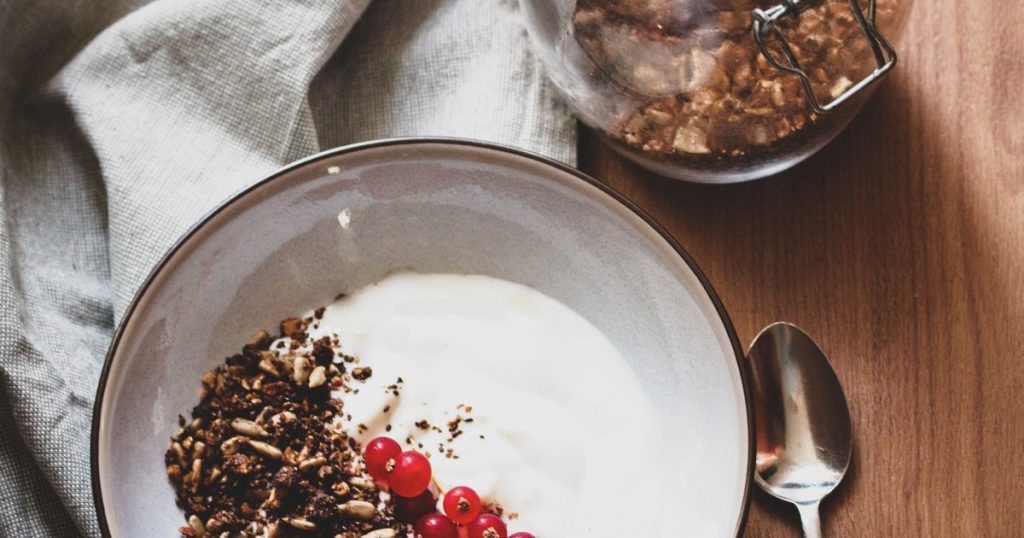
Greek yogurt bowl with berries, chopped walnuts, and a spoonful of ground flaxseed, plus a glass of water.
Calcium • Protein • Omega-3 • Vitamin C
🥗 Lunch
Big spinach and mixed-vegetable salad with grilled salmon, olive oil and lemon dressing, and a slice of whole-grain bread.
Omega-3 • Vitamin D • Magnesium • Vitamin C
🍎 Snack
An orange or kiwi, a small handful of almonds, and a glass of water.
Vitamin C • Magnesium • Hydration
🍽️ Dinner
Lentil and vegetable curry (or baked fish) with broccoli, bell peppers, and brown rice, plus a side of leafy greens.
Protein • Magnesium • Colourful vegetables
🌙 Evening
A warm cup of milk or fortified plant milk, if you enjoy it.
Calcium • Vitamin D (if fortified)
Adjust portions, spices, and ingredients to your culture, budget, allergies, and medical needs. Vegetarian versions work well: swap fish for lentils, beans, eggs, paneer, or tofu, and keep the leafy greens, nuts, seeds, and fortified foods in place.
Beyond Diet: Habits That Protect Your Back
- Move daily: Walking is one of the simplest, back-friendly activities. Gentle stretching and core-strengthening exercises, done regularly and within your comfort, support the muscles around L1–L5.
- Mind your posture: Sit with feet flat, screen at eye level, and get up to move every 30–45 minutes. Support your lower back with a small cushion if it helps.
- Lift safely: Bend your knees, keep the load close to your body, hold it with both hands, and avoid twisting while lifting. Get help for heavy items.
- Sleep well: A supportive mattress and a pillow that keeps your neck in line with your spine help your back recover overnight.
- Do not smoke: Smoking is linked with poorer disc health and slower healing. Quitting helps your whole body, including your spine.
Sports Research Triple Strength Omega-3 Fish Oil — 90 Softgels
This article’s back-friendly plate leans on omega-3 rich foods; these softgels are the pantry version of the same idea:
- Triple-strength EPA & DHA from wild Alaskan pollock, 1,250 mg per softgel
- Burpless formula — no fishy aftertaste
- Rated 4.7 stars from 55,000+ Amazon.ca ratings
As an Amazon Associate I earn from qualifying purchases.
🚨 Red Flags — See a Doctor Promptly If You Have:
- Numbness, tingling, or weakness in one or both legs
- Changes in bladder or bowel control
- Numbness around the saddle area (where you sit)
- Back pain with fever, chills, or unexplained weight loss
- Severe pain after a fall, accident, or other trauma
- Pain that is severe, getting worse, or not improving after a few weeks of self-care
These can be signs of a serious problem that needs urgent medical assessment — do not rely on diet or home remedies for them.
The bottom line: Feed your lumbar spine what it is made of — calcium, vitamin D, magnesium, protein, vitamin C, omega-3 fats, and water — fill your plate with leafy greens, fatty fish, yogurt, nuts, seeds, and colourful vegetables, and go easy on excess sugar and heavily processed foods. Combined with daily movement, good posture, and safe lifting, a spine-friendly diet gives your L1–L5 vertebrae and discs their best chance to stay strong and comfortable for years to come.
Disclaimer: This article is general information for educational purposes only and is not medical advice. Diet can support bone density, disc health, lower inflammation, and a healthy weight, but it does not cure herniated discs or other structural back problems on its own. Talk to your doctor, physiotherapist, or a registered dietitian for advice tailored to your health, medications, and conditions — especially before taking supplements or making major diet changes.