
Heart health guide
How okra, beans, eggplant and four more everyday vegetables can help keep LDL cholesterol in a healthier range — as part of an overall heart-friendly pattern of eating.
The short answer
No single vegetable can bring cholesterol down on its own. What genuinely helps is an overall pattern: more vegetables rich in soluble fibre, more beans and plant foods, and less saturated fat at the same meals. The seven foods below are standouts — rich in soluble fibre and plant compounds, and satisfying swaps for richer, fattier dishes. Think of them as regulars on your plate, not as medicine.
Cholesterol, in plain words
Cholesterol is a waxy substance your body needs in small amounts — it builds cell walls and helps make certain hormones and vitamin D. Your liver makes most of it, and food adds more. Because cholesterol does not dissolve in blood, it travels in tiny parcels called lipoproteins.
Two of those parcels matter most day to day. LDL (often called “bad” cholesterol) carries cholesterol out to the tissues, and too much of it can build up in artery walls over time. HDL (often called “good” cholesterol) carries cholesterol back to the liver. Heart-health guidance generally aims to keep LDL in a healthier range while supporting HDL.
Food is only one influence — genetics, activity, weight, smoking and medical conditions matter too. If your cholesterol is high, food changes work best alongside your clinician’s advice, not instead of it.
How vegetables and plant foods can help
The best-understood food lever for LDL is soluble fibre — the soft, gel-forming fibre in foods like okra, beans and carrots. The simple version: your liver uses cholesterol to make bile acids, which help you digest fat. Soluble fibre binds some of those bile acids in the gut, so they leave the body instead of being recycled. To replace them, the liver pulls more cholesterol out of the blood — and LDL can ease down over time.
Vegetables also contain plant sterols — natural compounds that resemble cholesterol and compete with it for absorption in the gut, so a little less cholesterol from food gets in. Amounts per serving are modest, but they add up across a plant-rich day.
The third effect is the quietest and maybe the biggest: displacement. A plate built around vegetables and beans has less room for the butter, fatty meats and full-fat cheese that raise LDL. Every swap does double duty — fibre up, saturated fat down.
7 vegetables that earn their place
“Best” here means practical: rich in soluble fibre or helpful plant compounds, easy to find in Canadian stores, and easy to cook. Rotate them through the week.
Okra
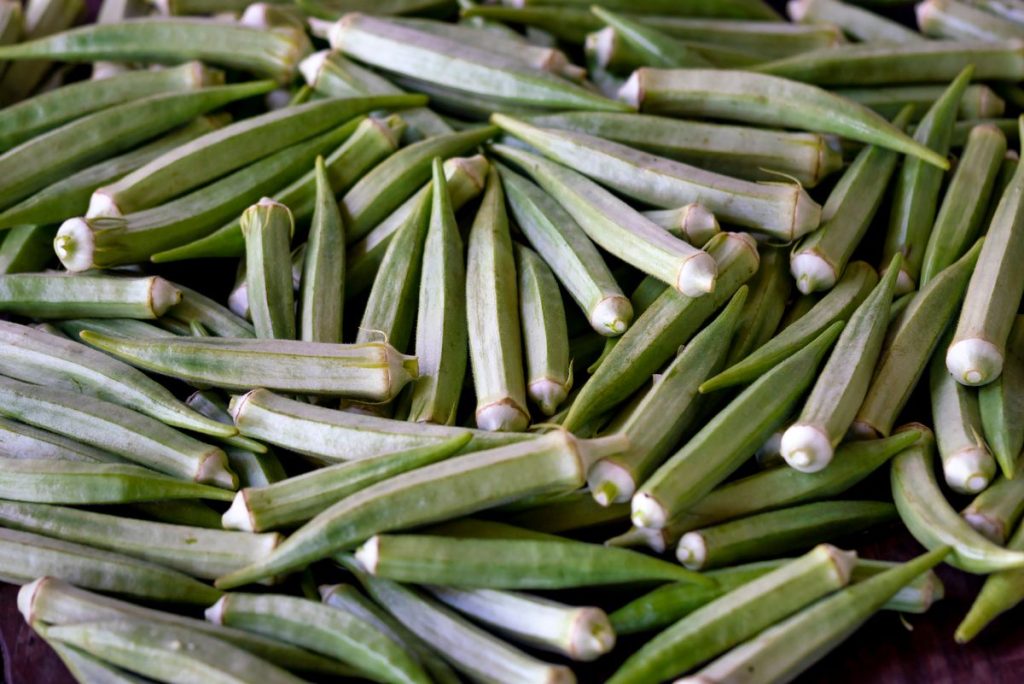
Why it helps: Okra’s famous slippery texture is soluble fibre at work — the gel-forming kind that binds bile acids. It is one of the most concentrated vegetable sources of it.
Best way to eat it: Cook it whole or in large pieces: bhindi sabzi with tomato and onion, roasted okra, or okra simmered in a curry or stew.
Eggplant
Why it helps: Eggplant brings fibre plus a deep-purple skin rich in plant pigments. It is also a brilliant stand-in for meatier, fattier mains, which lowers the saturated fat of the whole meal.
Best way to eat it: Roast or grill thick slices with olive oil, or make baingan bharta — roasted, mashed eggplant with tomato and spices. Go easy on deep-fried versions, which soak up oil.
Brussels sprouts
Why they help: These small cabbages offer a solid mix of soluble and insoluble fibre, and they belong to the cruciferous family linked with heart-friendly eating patterns.
Best way to eat them: Halve and roast at a high heat until the edges caramelise, with a little olive oil and garlic. Shredded raw sprouts make a crunchy slaw; start small if they are new to you.
Carrots
Why they help: Carrots are a friendly source of pectin, a soluble fibre, and they are cheap, sweet and available all year — the kind of habit food that actually sticks.
Best way to eat them: Raw sticks with hummus, grated into salads and slaws, or roasted until sweet — the fibre survives cooking, so enjoy them any way your household prefers.
Beans — kidney and black beans
Why they help: Beans are among the richest sources of soluble fibre, with plant protein as a bonus. Few foods do more for the fibre side of the cholesterol equation.
Best way to eat them: Rajma (kidney bean curry), black bean soup or chili, or beans tossed through salads and rice bowls. If using canned beans, drain and rinse them to reduce sodium.
Garlic
Why it helps: Garlic has been studied for cholesterol for decades; the honest summary is that any effect looks modest. Its bigger day-to-day value is flavour — it makes simple vegetables taste rich without butter or cream.
Best way to eat it: Use it generously as a cooking base — tadka in dals and sabzis, roasted whole cloves, or garlic stirred through greens and beans. Enjoy it as food, not as a supplement substitute.
Broccoli
Why it helps: Broccoli contributes fibre and a range of plant compounds, and it is one of the easiest vegetables to add to meals you already make.
Best way to eat it: Steam until just tender, roast with olive oil and lemon, or add small florets to soups, stir-fries and pasta. Frozen broccoli counts — it is picked and frozen at peak freshness.
Notice the pattern: fibre first, flavour always. The same foods also star in our guides to vegetables that help lower high blood pressure and vegetables for diabetes and blood sugar — one shopping list serves all three.
Smart swaps that do the heavy lifting
Vegetables work harder when they replace something, not just sit beside it:
Try olive oil or canola oil for roasting and sautéing. Keep butter for the occasional dish where its flavour really matters.
Try beans or lentils as the main protein a few times a week — rajma, dal, bean chili. The fibre goes up as the saturated fat comes down.
Try roasted vegetables with garlic and herbs. Same comfort, far less saturated fat, and the fibre helps.
Swaps beat bans. A pattern you enjoy and can keep for years will do more for your cholesterol than a strict fortnight you abandon.
A simple cholesterol-friendly day
This is a flexible example, not a prescription. Adjust portions and flavours to your household, culture and medical advice.
One day, built from the list
- Breakfast: Oatmeal with grated carrot, cinnamon and walnuts, or whole-grain toast with mashed beans and tomato.
- Lunch: Black bean and vegetable soup with a whole-grain roll and a carrot-cucumber salad.
- Dinner: Baingan bharta or roasted eggplant with rajma, brown rice, and steamed broccoli with lemon and garlic.
- Snack: Roasted Brussels sprouts leftovers, an apple, or a small handful of unsalted nuts.
- Prep note: Cook a double batch of beans — tomorrow’s lunch is halfway done.
Mistakes that quietly undo the good work
- Deep-frying the “right” vegetables in large amounts of butter or reused oil — the added fat can outweigh the fibre benefit.
- Expecting one food to cancel a pattern. A serving of okra does not offset daily processed meat and cream.
- Stopping prescribed cholesterol medication because a blood test improved or a diet “feels” like enough. Food supports treatment; it does not replace it. Never stop or change medication without your doctor.
- Relying on juices and cleanses. Juicing removes much of the fibre — the very part that helps.
- Burying vegetables in cheese and cream sauces, which can bring back the saturated fat you were trying to swap away.
Metamucil 3-in-1 Psyllium Fibre Powder — Orange, 1.36 kg
Psyllium husk is the soluble fibre this article keeps coming back to, and Metamucil is the name most Canadians reach for:
- 114 servings of psyllium husk fibre in one 1.36 kg tub
- Psyllium is the fibre known for supporting healthy cholesterol as part of a balanced diet
- Rated 4.7 stars from 2,300+ Amazon.ca ratings — and Amazon’s Choice in its category
As an Amazon Associate I earn from qualifying purchases.
Frequently asked questions
Can vegetables alone bring my cholesterol back to normal?
For some people with mildly raised LDL, a steady pattern of high-fibre, plant-rich eating makes a real difference. For others — especially where genetics play a strong role — food helps but may not be enough on its own. Only a blood test and your clinician can tell you where you stand.
How long before food changes show up in a blood test?
Clinicians often recheck lipids after a few months of a new pattern. Ask your doctor when they would like to retest you, and keep the pattern steady in the meantime.
Are eggs completely off the table?
For most people, saturated fat in the overall diet affects LDL more than the cholesterol in food itself. Many guidelines no longer treat eggs as forbidden, but if your clinician has set you a limit, follow it.
Does cooking destroy the helpful fibre?
No. Fibre holds up well to steaming, roasting and simmering. What changes the picture is the cooking fat: a little olive oil is fine, while lots of butter, ghee or reused frying oil works against your goal.
Should I take a plant sterol or fibre supplement instead?
Some people use them with their clinician’s guidance, but whole foods bring fibre, sterols, protein and micronutrients together, usually at lower cost. Food first is a reasonable default; supplements are a discussion for your care team.
Bottom line
Support healthier cholesterol with a pattern, not a promise: soluble-fibre vegetables and beans most days, olive oil instead of butter most of the time, and processed meat no longer the default. Small swaps, repeated, are what blood tests eventually notice.
Sources and further reading
The guidance in this article reflects the following public-health and charity resources.
- Heart and Stroke Foundation of Canada. Cholesterol
- Health Canada. Fibre
- Harvard T.H. Chan School of Public Health — The Nutrition Source. Fats and Cholesterol
- NHS. High cholesterol — how to lower your cholesterol