

Seeds & everyday nutrition
Flaxseeds are one of the simplest upgrades you can stir into food you already eat — plant omega-3, fibre and minerals in a spoonful, with honest notes on what they can and cannot do.
The short answer
Flaxseeds earn their reputation quietly. They are rich in plant omega-3 fat, both kinds of fibre, and a group of plant compounds called lignans — and they cost very little per serving. Ground flaxseed is the form to buy or make, because your body can actually reach the nutrients inside. One to two tablespoons a day, added to food you already eat, is enough. They support a healthy pattern; they are not a treatment for any condition.
What are flaxseeds?
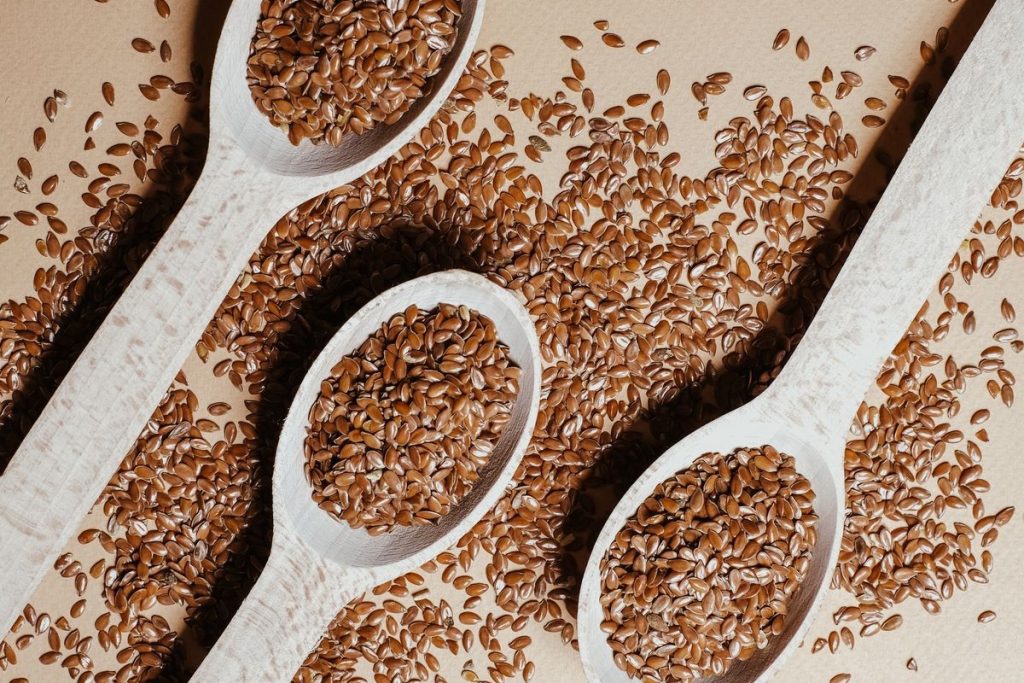
Flaxseeds are the small, flat, shiny seeds of the flax plant, sold in brown and golden varieties. Many readers will also know them as flex seeds, or as alsi in Hindi and Punjabi kitchens, where they have long been roasted, ground into chutneys and pinni, and stirred into winter foods. Canada is one of the world’s largest flax producers, so good-quality flaxseed is easy to find in local grocery stores, often in the baking or natural-foods aisle, whole or already ground.
The seeds taste mild and slightly nutty, so they disappear into smoothies, doughs and porridge without changing the flavour of the meal — while quietly adding fibre, healthy fat and minerals.
Nutrition snapshot
Values below are for about 2 tablespoons of ground flaxseed (roughly 14 g). They are approximate — brands and growing conditions vary — but they give a fair picture of why this seed is considered nutrient-dense.
Per 2 tablespoons ground flaxseed (approximate)
Two things stand out: very few foods offer this much ALA per spoonful, and many adults fall short of daily fibre targets — two tablespoons of ground flax can close a noticeable part of that gap.
7 reasons to add flaxseed to your day
These are the best-supported, most practical reasons — stated plainly, without miracle language. Each one is a “can help support”, not a promise.
A leading plant source of omega-3 (ALA)
Flaxseed is one of the richest plant sources of alpha-linolenic acid, the plant form of omega-3. Your body converts only a small portion of ALA into the EPA and DHA found in oily fish, so flax does not fully replace fish for those who eat it — but for vegetarian and vegan diets, it is one of the most useful ALA sources available.
Fibre that keeps digestion moving
Flaxseed brings both insoluble fibre, which adds bulk, and soluble fibre, which forms a gentle gel with water. Together they can support regular bowel movements and a comfortable gut.
May help support healthy cholesterol
The soluble fibre and lignans in flaxseed have been studied for cholesterol, and the fair summary is that regular ground flaxseed may help modestly lower LDL cholesterol in some people, as part of an overall heart-friendly pattern. It works alongside — never instead of — any treatment your doctor has prescribed.
Blood-sugar friendly
Fibre slows the speed at which a meal is digested, and flaxseed’s fibre and healthy fat can help soften the rise in blood sugar after eating, especially when it is added to carb-rich foods like porridge, roti or baked goods. That steadying effect is one reason flax fits well into diabetes-conscious eating patterns, in normal food amounts.
Lignans — flax’s signature antioxidants
Flaxseed is exceptionally rich in lignans, plant compounds with antioxidant activity that are studied for their possible role in everyday cellular protection and hormone-related health. Research is ongoing and conclusions are modest, but lignans are a genuine point of difference between flax and most other seeds.
Helps you feel full, which can support weight goals
Fibre and fat together slow stomach emptying, so a breakfast with ground flax stirred in tends to keep you satisfied longer than the same breakfast without it. Flaxseed will not cause weight loss on its own, but as a habit it can make portion control and fewer between-meal snacks feel easier.
An easy protein and mineral top-up
Two tablespoons add a few grams of plant protein plus useful magnesium, phosphorus and thiamine to meals that might otherwise be low in all three. It is a quiet boost rather than a protein source to rely on alone — think of it as raising the nutritional floor of foods you already eat, from dal to oatmeal.
Ground, whole or oil? The form matters
This is the single most important thing to know about flaxseed. The seed’s hard outer coat is built to survive digestion — which is good for the plant and less good for you.
Grinding breaks the coat open, so your body can absorb the omega-3, lignans and minerals inside. Buy it pre-ground or grind whole seeds in a spice or coffee grinder. This is the form used in most nutrition research.
Whole seeds often pass through the digestive system largely intact, carrying much of their nutrition out with them. They still add some fibre and a pleasant crunch on breads and salads, but they are a poor way to get flax’s omega-3.
The oil concentrates the ALA omega-3, but it contains no fibre and few lignans unless they are added back. It also spoils quickly and is not for cooking at high heat. Useful for dressings, but it is not a substitute for the whole ground seed.
Simple ways to eat it
Ground flaxseed is at its best hidden in plain sight. Start with one tablespoon a day and build up over a week or two.
Easy everyday ideas
Smoothies
Blend 1 tablespoon into any fruit or green smoothie — it thickens slightly and adds no noticeable flavour.
Oatmeal and porridge
Stir it in during the last minute of cooking, or sprinkle over the top with fruit.
Yogurt and raita
Mix a spoonful into plain yogurt; the gel-forming fibre makes it pleasantly thick.
Roti and paratha dough
Knead 1–2 tablespoons of ground flax into the flour for a batch of dough — a traditional-friendly way to add fibre to everyday breads.
Baking and the “flax egg”
Whisk 1 tablespoon ground flax with 3 tablespoons water, rest 10 minutes, and use it to replace one egg in muffins, pancakes and baking — it binds batters well and adds fibre in the process.
Soups, dal and salads
Stir into hot dal just before serving, or sprinkle over salads and roasted vegetables.
How much, and how to store it
For most adults, 1–2 tablespoons of ground flaxseed a day is a sensible, commonly used amount — enough to gain the fibre and ALA without overwhelming your digestion. If you are new to it, begin with 1 teaspoon to 1 tablespoon daily for the first week, then increase gradually, and spread your amount across meals if that feels easier.
Storage matters because the healthy fats in ground flax can turn rancid. Keep ground flaxseed in an airtight container in the fridge, or in the freezer for longer storage, and use it within a few weeks of grinding. Whole seeds are hardier and keep for months in a cool, dark cupboard. If ground flax smells bitter, sharp or like paint, it has turned — throw it out and start fresh.
Cautions worth knowing
Frequently asked questions
Brown or golden flax — which is better?
Nutritionally they are very close; both offer similar fibre, ALA and lignans. Golden flax has a slightly milder flavour and disappears more easily into light-coloured baking, while brown flax is usually easier to find and often cheaper in Canada. Choose whichever you will actually use.
Can you eat flaxseed raw?
Yes — ground flaxseed is commonly eaten raw, stirred into smoothies, yogurt and porridge, and normal food amounts are a routine part of many diets. Light roasting is also fine and adds a nutty flavour. There is no need to soak ground flax first, as long as you drink enough fluid with your meals.
Does cooking destroy the benefits?
Mostly, no. The fibre and lignans hold up well in everyday cooking and baking, and the ALA in flax is more heat-stable than many people expect at normal baking temperatures. Prolonged high-heat frying is harder on the oils — one more reason flaxseed oil itself is best kept for dressings, not the frying pan.
Is flaxseed the same as linseed?
Yes — flaxseed and linseed are the same seed with two names. “Flaxseed” is the name most often used for food in Canada, while “linseed” appears on some imported and UK-style packaging.
Bob’s Red Mill Flaxseed Meal — 907 g
If you want to start the daily flaxseed habit from this article, this is the simple way to do it:
- Already ground (milled) — the form your body absorbs best, as explained above
- Ready for smoothies, oatmeal, yogurt and baking — no grinding at home
- Big 907 g bag from a trusted mill brand; store it in the fridge after opening
As an Amazon Associate I earn from qualifying purchases.
Bottom line
Buy it ground, keep it cold, and add a spoonful or two to food you already eat. Flaxseed will not transform your health overnight, but few foods offer this much fibre, plant omega-3 and mineral value for so little money and effort — and small, repeatable upgrades are the ones that last.
Sources and further reading
The nutrition values and general guidance in this article reflect information published by the following references. Figures are approximate and provided for general education.
- USDA FoodData Central. Nutrient profile for flaxseed (seeds, flaxseed) — the source for the approximate values in the nutrition snapshot.
- Health Canada. Guidance on fibre, healthy fats and the safe everyday use of flaxseed as a food.
- Mayo Clinic. Consumer health information on flaxseed and flaxseed oil, including benefits, amounts and medication cautions.