
Vitamin A · Fibre · Healthy carbs
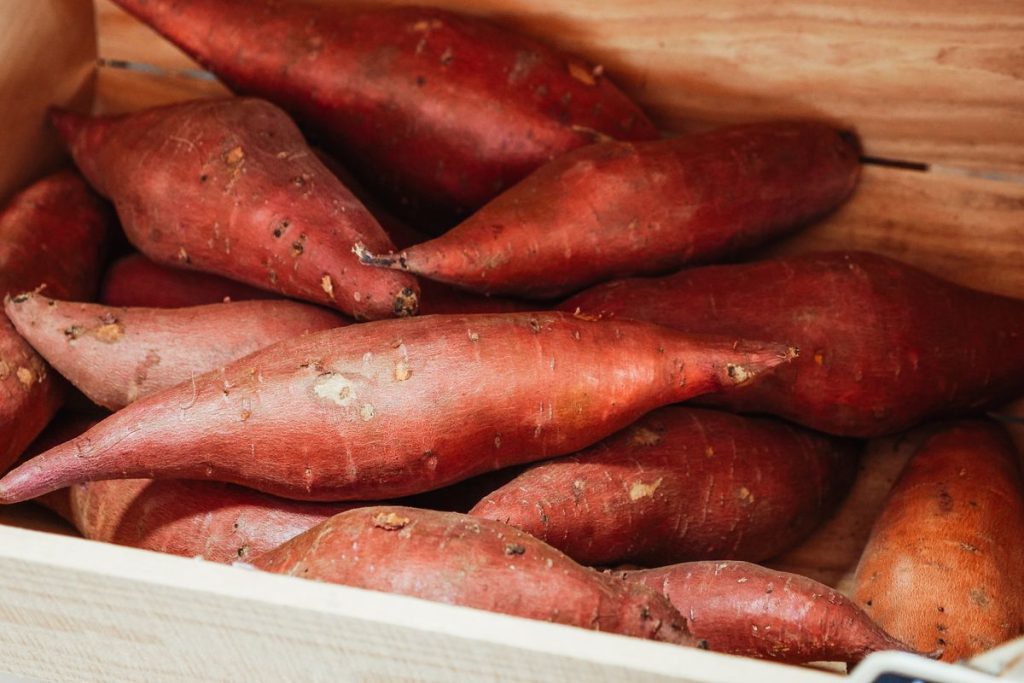
Cheap, filling and sweet without added sugar — the sweet potato is one of the most nutrient-packed vegetables in the produce aisle. One medium sweet potato may deliver well over a day’s vitamin A, plus fibre, potassium and vitamin C. Here are seven reasons it earns a regular spot on your plate.
The short answer
Sweet potatoes are rich in beta-carotene, which the body turns into vitamin A — one medium baked sweet potato may provide more than a full day’s worth. They also bring fibre, potassium, vitamin C and manganese at only about 90 calories per 100 grams, and may help support eye, gut, blood sugar and blood pressure health. One honest limit: no single vegetable can prevent or treat disease, and portions still matter if you watch your blood sugar.
Why sweet potatoes stand out
Most vegetables ask you to choose: cheap or nutritious, filling or light, easy to cook or worth eating. The sweet potato refuses the trade-off — it costs little, keeps for weeks in a cool cupboard, cooks with almost no effort, and carries a nutrient profile that would impress at five times the price.
Its signature nutrient is beta-carotene, the orange pigment that gives the flesh its colour. Your body converts it into vitamin A as needed — vitamin A that supports normal vision in dim light and helps immune cells do their work. Unlike preformed vitamin A from supplements, beta-carotene from food carries no toxicity risk, because the body only converts what it needs.
They also bring fibre, potassium, vitamin C, manganese and small amounts of B vitamins. Their natural sweetness comes with fibre that slows digestion, so they behave very differently in the body from the same amount of sugar in a biscuit. And because they are so filling for their calories, they suit anyone trying to eat well without feeling hungry an hour later.
Sweet potato nutrition snapshot: what the numbers say
Values below are approximate, for a baked sweet potato.
Daily needs and standout sources
No single nutrient explains the sweet potato. What may help is the whole package: vitamin A plus fibre plus potassium, in a food that is cheap, filling and easy to cook.
7 sweet potato benefits
What each brings to everyday health. Amounts are approximate.
Vitamin A for eyes and immunity
Beta-carotene is the headline: one medium baked sweet potato may provide well over 100% of the vitamin A an adult needs in a day. Vitamin A supports the retina and vision in low light, and helps the immune system maintain the cells that fight infection. Because the body converts beta-carotene only as needed, they are a safe way to top up.
Fibre for gut health and fullness
A medium sweet potato carries about 4 grams of fibre — roughly a sixth of a day’s needs. Fibre feeds friendly gut bacteria, supports regular digestion, and slows stomach emptying, which is why a baked sweet potato keeps you full for hours. Eating the washed skin adds more.
Steadier blood sugar than white potatoes
Sweet potatoes have a lower glycemic index than white potatoes — in the low 60s versus the high 70s or above — and their fibre slows how quickly their carbohydrates reach the bloodstream. That may help avoid sharp rises and crashes that leave you hungry again quickly. Portion still matters, and pairing them with protein or beans helps further. Our guide to the 10 best vegetables for diabetes explains how fibre-rich vegetables fit into blood-sugar-friendly meals.
Potassium that may support healthy blood pressure
With about 475 mg of potassium per 100 grams, sweet potatoes are a genuinely useful source of this mineral. Potassium helps the body balance sodium, and potassium-rich diets are linked with healthier blood pressure. Serve one with beans and greens for potassium from three directions at once.
Vitamin C, manganese and skin support
Sweet potatoes supply about 13 mg of vitamin C per 100 grams, which the body uses to make collagen for firm skin and to support immune function. They also provide manganese, a mineral involved in energy metabolism and in enzymes that protect cells from damage.
Purple varieties bring extra antioxidants
Orange is the classic, but purple-fleshed varieties — sometimes sold as ube or Okinawan sweet potatoes — carry anthocyanins, the antioxidant pigments that colour blueberries. Early research suggests these pigments may help protect cells from oxidative stress, so they are worth trying for colour and variety.
Filling, affordable and endlessly versatile
At about 90 calories per 100 grams, they are low in energy density: a satisfying portion carries a small calorie load, which may help with weight management. They are also among the cheapest vegetables per nutrient, keep for weeks without refrigeration, and suit sweet and savoury dishes alike.
Ways to eat sweet potatoes every day
Five habits that fold sweet potatoes into food you already cook:
Bake whole, then stuff it
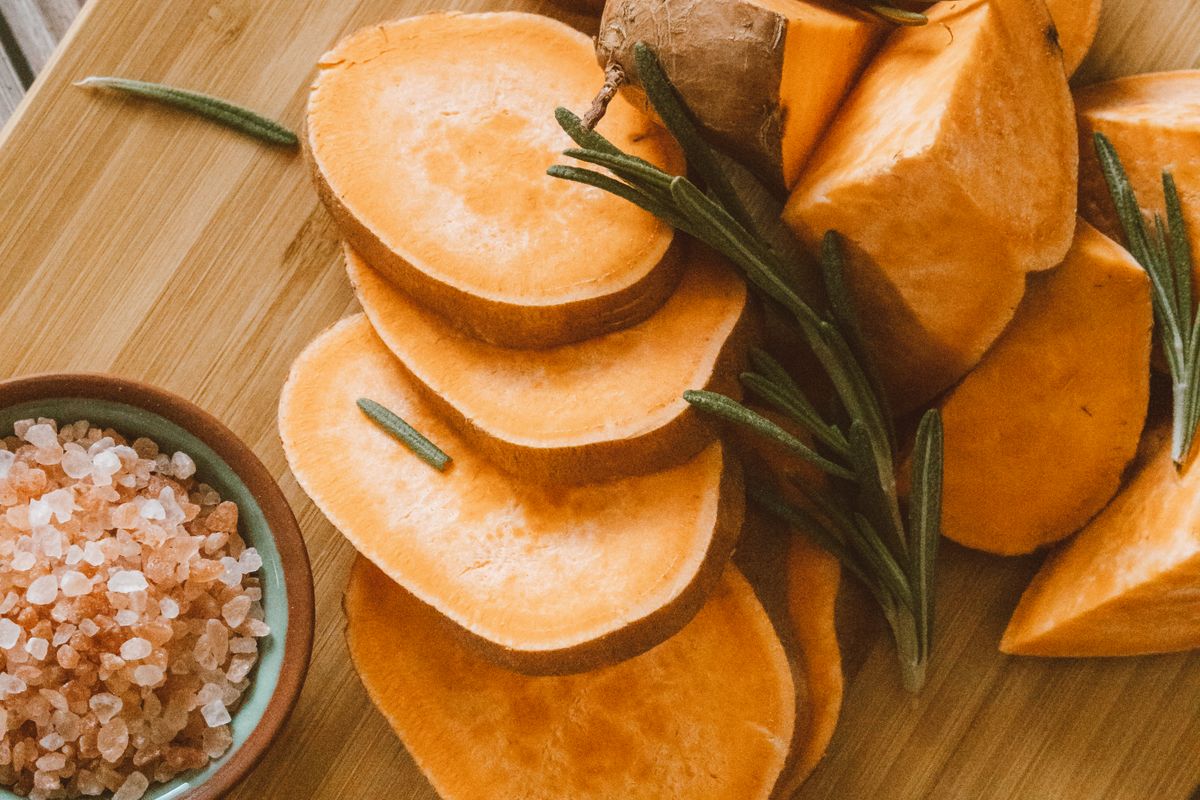
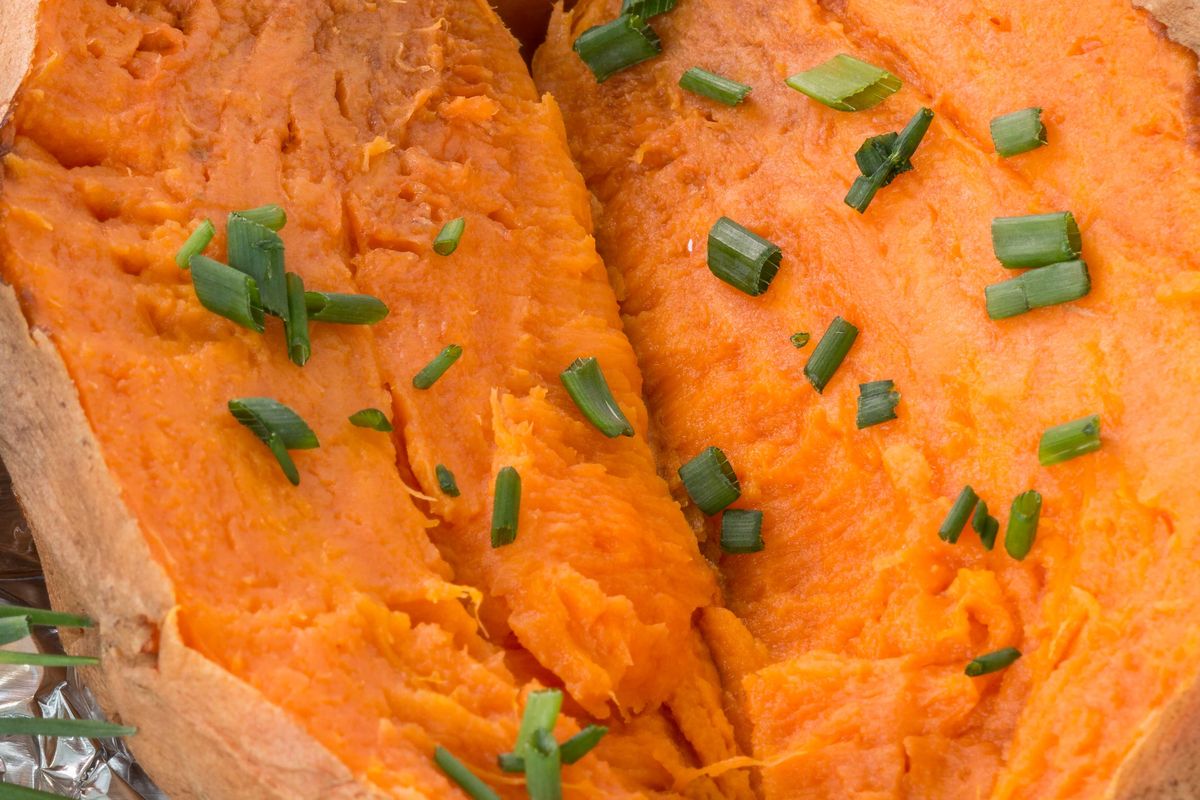
Scrub, prick with a fork, and bake at 200°C (400°F) for 45–60 minutes until soft. Split and fill with black beans, salsa and yogurt, or lentils and spinach — dinner in one potato.
Roast wedges with spice
Cut into wedges, toss with olive oil, salt, cumin and smoked paprika, and roast until the edges crisp — the little oil also helps your body absorb the beta-carotene.
Mash with olive oil, not butter
Boil or steam cubes until tender, then mash with olive oil, a little milk and black pepper — lighter than buttered mash, with the potato’s own sweetness front and centre.
Blend into soup
Simmer cubed sweet potato with onion, garlic, ginger and stock, then blend smooth. A spoonful of coconut milk or yogurt finishes it — and it freezes beautifully.
Air-fryer fries
Cut thin sticks, toss with a teaspoon of oil and salt, and air-fry in a single layer until crisp. A far better everyday swap than deep-fried chips.
Sweet potato vs white potato: which wins?
Both are good foods, so this comparison causes more arguments than it deserves. White potatoes are rich in potassium and vitamin C, provide fibre — especially with the skin on — and are a useful source of vitamin B6. A plain boiled or baked white potato is a perfectly healthy food.
Where sweet potatoes pull ahead is vitamin A — white potatoes have almost none — and a lower glycemic index, which may suit people watching blood sugar. White potatoes edge ahead slightly on potassium and vitamin C. Fibre is similar when the skin is eaten. The honest answer is to eat both, and judge the plate by what is served with them: a sweet potato with beans beats a white potato buried in butter and cheese.
Cautions worth knowing
Organic Sweet Potato Seeds — 200 pcs (Ipomoea batatas)
If this article has you thinking about growing your own, this is a low-cost place to start:
- 200 seeds in one packet — enough for a home garden bed, with seeds to spare
- Grow your own orange-fleshed sweet potatoes and harvest them in late summer
- A small, inexpensive way to try growing this article’s star vegetable yourself
As an Amazon Associate I earn from qualifying purchases.
Frequently asked questions
Are sweet potatoes good for diabetes?
They may be a better choice than white potatoes, thanks to their lower glycemic index and fibre, which can help slow blood sugar rises. But portion size and the whole meal matter more than any one food, and responses vary. If you live with diabetes, check your readings and talk with your doctor or dietitian about portions.
Sweet potato vs white potato — which is healthier?
Both are healthy. Sweet potatoes win clearly on vitamin A and have a lower glycemic index; white potatoes edge ahead slightly on potassium and vitamin C. Best choice: variety — eat both, keep the skin on, and watch what you serve them with.
Can you eat the skin?
Yes, if it is scrubbed well under running water. The skin adds fibre and nutrients and helps a baked sweet potato hold together. Peel off damaged or sprouting spots, and skip the skin if the potato looks mouldy or smells off.
Bottom line
Bake one, roast wedges, or blend it into soup — a sweet potato a few times a week may help your eyes, gut, blood pressure and blood sugar, for pennies a serving. Keep portions sensible, vary your vegetables, and let a doctor — not a blog post — decide anything about a diagnosis or medicine.
Sources and further reading
Figures below are approximate.
- USDA FoodData Central. Nutrient profiles for baked and boiled sweet potatoes.
- Health Canada. Guidance on vegetables, fruit and plant-based eating in the Canadian diet.
- Mayo Clinic. Health information on vitamin A, beta-carotene, fibre and the glycemic index.