
Natural protein guide
Whole-food ways to get more protein, without powders or complicated rules.
The short answer
You can meet your protein needs with ordinary whole foods — lentils, beans, tofu, eggs, Greek yogurt, grains, nuts and seeds. Most healthy adults need at least about 0.8 g of protein per kilogram of body weight a day, spread across meals rather than saved for dinner.
Whether you’re looking to build muscle, lose weight, feel fuller longer, or simply stay healthy, protein is an essential nutrient your body can’t live without. But how much protein do you really need – and how can you get more of it naturally, without relying on artificial supplements?
Let’s explore smart, whole-food-based ways to boost your protein intake and keep your body fueled and strong.
Why Protein Matters
Protein plays a key role in nearly every part of your body:
- Builds and repairs muscles and tissues
- Supports immune function
- Helps maintain healthy skin, nails, and hair
- Keeps you full and energized throughout the day
Whether you’re active or just trying to maintain a healthy lifestyle, a balanced protein intake is vital. Those muscles also support your posture and spine — see our guide to the best diet for a healthy lumbar spine.
How Much Protein Do You Actually Need?
Protein needs are usually described in grams per kilogram of body weight. For healthy adults, the recommended dietary allowance — the minimum to avoid deficiency — is about 0.8 g per kilogram per day: roughly 56 g a day for a 70 kg adult.
Many experts suggest more for some groups: about 1.0–1.2 g per kilogram for older adults protecting muscle, and 1.2–1.6 g for the very active or those building muscle.
Treat these figures as a general map, not a prescription — a dietitian or doctor can set a personal target.
Top Natural Sources of Protein
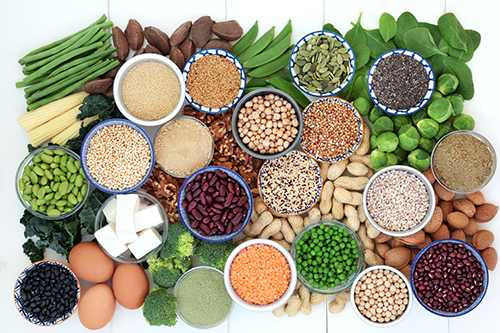
You don’t need to eat meat at every meal or rely on processed shakes. Nature offers plenty of clean, whole-food protein options:
Legumes
Lentils, chickpeas, black beans, and kidney beans are packed with protein and fiber. Great for soups, stews, salads, and veggie patties. Soy foods count here too — edamame and tofu are among the richest plant sources.
Protein: about 18 g per cooked cup (lentils); 15 g per cup (chickpeas, black beans); 13 g per cup (kidney beans); 17 g per cup (edamame); 10 g per 100 g (firm tofu).
Nuts and Seeds
Almonds, peanuts, walnuts, chia seeds, flaxseeds, and pumpkin seeds offer a great protein boost and healthy fats. Add them to oatmeal, smoothies, or yogurt.
Protein: about 6 g per handful (28 g) of almonds; 8 g per 2 tablespoons of peanut butter; 5 g per 2 tablespoons of chia seeds; 7–9 g per 28 g of pumpkin seeds.
Leafy Greens (Surprisingly High!)
Spinach, kale, and broccoli may not be protein powerhouses, but they add up over time — especially in large portions. Plus, they offer fiber, iron, and vitamins for a complete nutritional profile.
Protein: about 5 g per cooked cup of spinach or broccoli.
Whole Grains
Quinoa, brown rice, oats, and whole wheat are excellent plant-based protein sources. Quinoa, in particular, is a complete protein with all nine essential amino acids.
Protein: about 8 g per cooked cup of quinoa; about 5 g per half cup of dry oats.
Eggs
One of the most bioavailable protein sources out there. Ideal for any meal of the day — scrambled, boiled, poached, or in healthy baking.
Protein: about 6 g per large egg.
Greek Yogurt & Cottage Cheese
Rich in casein and whey proteins, great for muscle recovery. Choose unsweetened varieties for a healthier option.
Protein: about 17 g per ¾ cup (175 g) of plain Greek yogurt; about 13 g per half cup of cottage cheese.
Complete vs. Incomplete Protein: Do You Need to Combine Foods?
Proteins are built from amino acids; nine are “essential,” meaning your body cannot make them and food must supply them. Foods providing all nine in useful amounts are called complete proteins. Most animal foods qualify — and so do soy (tofu, edamame) and quinoa.
Most other plant proteins run a little low in one essential amino acid — grains tend to be low in lysine, legumes lower in methionine. Older advice said to combine them carefully at every meal; current guidance is relaxed — variety across the day is enough, and classic pairings still taste great: dal with rice, beans with corn, hummus with pita.
Tips to Increase Protein Daily
Want to boost your intake without overthinking it? Try these easy ideas:
- Start your day with protein: Eggs, Greek yogurt, or a smoothie with nut butter.
- Snack smarter: Trade chips and cookies for nuts, roasted chickpeas, or protein bars made from whole foods.
- Add legumes to every meal: Mix beans into soups, rice, or salads.
- Use seeds as toppings: Sprinkle flaxseeds or hemp seeds on cereal, yogurt, or salad.
- Prep ahead: Cook quinoa, lentils, or chickpeas in batches and store them for quick meals.
Protein’s fullness effect also supports weight management — see how filling, high-fibre foods help in our guide to the best vegetables for weight loss.
A Day of Protein-Rich Eating
Sample day — roughly 90–100 g of protein
- Breakfast (~24 g): Greek yogurt bowl with oats, chia seeds and berries — or two eggs on whole-grain toast with a glass of milk.
- Lunch (~25 g): Lentil and vegetable soup with a whole-grain roll.
- Snack (~7–15 g): A handful of almonds, roasted chickpeas, or a cup of edamame.
- Dinner (~28 g): Tofu and broccoli stir-fry with quinoa.
Protein for Brain, Eyes, and Overall Health
Protein isn’t just about muscles:
- Brain: Amino acids from protein support neurotransmitters for focus, memory, and mood.
- Eyes: Proteins like taurine and antioxidants (found in eggs and leafy greens) help maintain eye health.
- Liver and Heart: Lean and plant-based proteins help reduce fat buildup and support cardiovascular health.
A Special Note for Vegetarians
If you eat little or no meat, protein is very achievable with a loose plan. Make legumes a daily anchor — a cup of lentils, beans or chickpeas covers a large share of the day. Add a soy food most days, since tofu and edamame are complete proteins; eggs and dairy fill gaps if you eat them. Put protein at every meal, and pair iron-rich greens with vitamin C foods (spinach with lemon, say) to help absorb plant iron.
Plant-Based Protein Ideas from FreshVegetable
Looking for low-oil, heart-healthy recipes that boost protein? FreshVegetable has you covered! Try:
- Lentil-spinach curry
- Chickpea-avocado salad
- Stir-fried tofu and broccoli
- Quinoa-stuffed bell peppers
Common Protein Mistakes to Avoid
- Saving it all for dinner: Moderate amounts spread across the day work better than one large serving.
- Leaning on processed meats: Sausages and deli meats add sodium and saturated fat with their protein. Beans, eggs and yogurt are gentler defaults.
- Trusting “protein” labels blindly: Some bars and shakes carry nearly as much sugar as a dessert. Check the label — whole foods first.
- Assuming more is always better: Beyond your needs, extra protein is mostly extra calories. Enough, consistently, beats excess.
Vega Protein and Greens, Vanilla — 614 g
A vegetable blog’s protein pick had to be plant-based — and Vega is a Canadian favourite:
- Plant-based pea protein plus real greens in every scoop
- Vegan and non-GMO, from Canadian brand Vega
- Rated 4.1 stars from 6,800+ Amazon.ca ratings
As an Amazon Associate I earn from qualifying purchases.
Frequently Asked Questions
Can I get enough protein without eating meat?
Yes. Legumes, soy foods, eggs, dairy, whole grains, nuts and seeds can fully cover an adult’s needs — the key is a protein anchor at each meal, as the sample day shows.
Do I need protein powder?
Usually not — powders are a convenience for busy days, while whole foods deliver the same amino acids plus fibre, vitamins and minerals.
Do plant proteins have to be combined in the same meal?
No — that rule is outdated. A variety of plant proteins across the day supplies all the essential amino acids.
Is eating a lot of protein hard on the kidneys?
For healthy kidneys, intakes in the ranges above are generally considered fine. Anyone with kidney disease, though, may have a specific protein limit and should follow their clinician’s guidance.
When is the best time to eat protein?
There is no magic window. Spreading it across the day supports fullness and muscle maintenance better than one big serving — steady fullness is also why protein features in our weight-loss vegetables guide.
Final Thoughts
You don’t need expensive powders or meat-heavy meals to get enough protein. With a few smart swaps and a focus on fresh, whole foods, you can meet your protein goals naturally – and feel stronger, more energetic, and healthier every day.
Fuel your body with purpose. Cook + Eat + Stay Fresh!
Sources & Further Reading
Protein values and guidance here are drawn from these public resources.
- Health Canada. Protein
- Harvard T.H. Chan School of Public Health, The Nutrition Source. Protein
- U.S. Department of Agriculture. FoodData Central (protein values per serving)
- Academy of Nutrition and Dietetics. Position of the Academy of Nutrition and Dietetics: Vegetarian Diets